Locations:


The VeloSano global footprint continues to grow as a fundraising movement
Content is property of Cleveland Clinic and for news media use only.
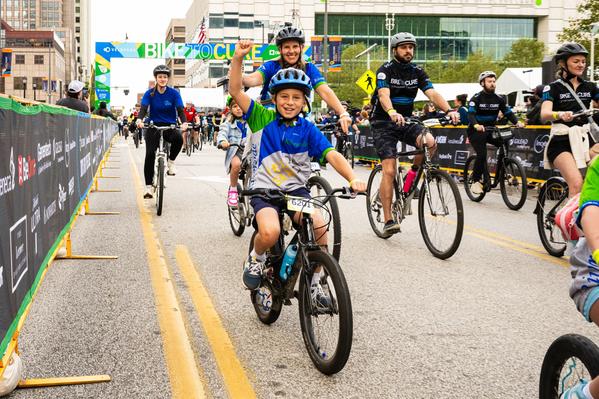
A total of $14.5 million was raised in 2025 for VeloSano, Cleveland Clinic's movement to fund lifesaving cancer research.
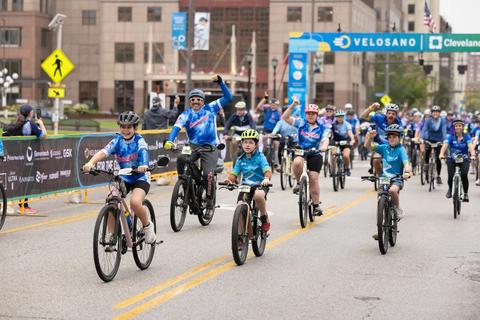
This achievement was made possible through the collective efforts of the VeloSano community, including more than 4,000 participants in the annual Bike to Cure and Trike & Bike signature events, as well as 30,000-plus donors who made direct contributions or legacy gifts to the fund.
The total amount was announced today in a video celebrating the dedication of everyone involved in VeloSano's efforts throughout 2025. Since its inception in 2014, more than $95 million has been raised for cancer research at Cleveland Clinic and Cleveland Clinic Children's. VeloSano began with a weekend event and has evolved into an initiative that engages individuals, families and organizations throughout the year.
“Cancer remains one of the most pressing health challenges of our time,” said Alex A. Adjei, M.D., Ph.D., Chief of Cleveland Clinic’s Cancer Institute. “Now more than ever, research funding is essential to accelerate breakthroughs, improve treatments, and move us closer to a cure. Support for VeloSano empowers Cleveland Clinic researchers to push the boundaries of scientific discovery and bring hope to patients and families.”
Every dollar raised by VeloSano supports cancer research at Cleveland Clinic. A portion of VeloSano funds is awarded through a competitive application process known as VeloSano Pilot Grants. Since 2014, over 260 cancer research projects have been funded and an additional $85 million has been earned from extramural granting sources, making the total impact of VeloSano more than $180 million. Additionally, funding has supported clinical trials and the training of high school students, college students and postdoctoral fellows to ensure future generations continue the research to conquer cancer.
Bike to Cure weekend in September is one of the many events that contributes to VeloSano’s year-round fundraising effort. Nearly 2,750 riders participated in this year’s annual flagship event. In July, VeloSano Trike & Bike mobilized children ages 3 to 10 to ride around the Cleveland Metroparks Zoo and fundraise for pediatric cancer research. In June, Cleveland Clinic London participated in the London to Brighton Ride to show their support and raise funds for VeloSano. Next on the horizon is VeloSano Florida for the Cure, happening March 28, 2026, in Fort Lauderdale, Fla., — a new opportunity to rally and raise funds.
VeloSano has been supported by long-time partners — Founding Partners: the Cleveland Guardians and the Kohl Fund; Supporting Partners: Adcom, Jones Day, Lexus of Cleveland, and Petitti Garden Centers; and Contributing Partners: Amgen, AstraZeneca, BeOne, Genentech, Gilead Oncology, Incyte, Johnson & Johnson, KeyBank, Michelob Ultra, Novartis, Pfizer, The Lerner Foundation, and TransDigm Group.
Next year’s VeloSano Bike to Cure Weekend is Sept. 18-19. Registration information will be available on velosano.org in early 2026. To learn more about how to get involved, visit velosano.org/get-involved.
To read about projects funded by VeloSano visit impact.velosano.org.
Cleveland Clinic is a nonprofit multispecialty academic medical center that integrates clinical and hospital care with research and education. Founded in 1921 by four renowned physicians with a vision of providing outstanding patient care based upon the principles of cooperation, compassion and innovation, Cleveland Clinic has pioneered many medical breakthroughs, including coronary artery bypass surgery and the first face transplant in the United States. Cleveland Clinic is consistently recognized in the U.S. and throughout the world for its expertise and care. Among Cleveland Clinic’s 83,000 employees worldwide are more than 6,600 salaried physicians and researchers, and 21,900 registered nurses and advanced practice providers, representing 140 medical specialties and subspecialties. Cleveland Clinic is a 6,725-bed health system that includes a 173-acre main campus near downtown Cleveland, 23 hospitals, 300 outpatient facilities, including locations in northeast Ohio; Florida; Las Vegas, Nevada; Toronto, Canada; Abu Dhabi, UAE; and London, England. In 2025, there were 15.9 million outpatient encounters, 343,000 hospital admissions and observations, and 336,000 surgeries and procedures throughout Cleveland Clinic’s health system. Visit us at clevelandclinic.org. Follow us at x.com/CleClinicNews. News and resources are available at newsroom.clevelandclinic.org.
Editor’s Note: Cleveland Clinic News Service is available to provide broadcast-quality interviews and B-roll upon request.



 Search