Locations:




 Search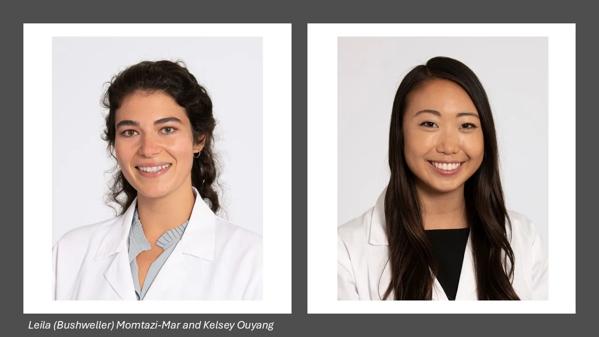
The Cleveland Clinic Lerner of College of Medicine of Case Western Reserve University (CCLCM) is a five-year program dedicated to developing the next generation of physician investigators. During their first year, students are assigned dedicated physician and research advisors to help ensure they reach their educational goals. In their fourth year, students work with a mentor to develop a master’s-level thesis in basic science, translational medicine, clinical medicine or health systems. When the students graduate, they each receive an MD with Special Qualification in Biomedical Research from Case Western Reserve University.
The research in which students are involved is critical, timely and often results in presentations at national conferences and publication in scholarly journals. The examples below briefly describe two students’ research projects, one that involves how socioeconomic factors shape access to male infertility care, and another that involves why Merkel cell carcinoma behaves more aggressively in organ transplant recipients than in patients with normal immune function:
“During my research year, I had the privilege of being mentored by Scott Lundy, MD, PhD, on several projects. My main project looked at how socioeconomic factors shape access to male infertility care, a topic that’s surprisingly overlooked, even though male factors contribute to at least half of infertility cases.
“Using deidentified data from nearly 4,000 men seen at our center, I explored a simple but important question: Does where someone live and the resources in their neighborhood affect how quickly they receive a diagnostic workup and how severe their fertility issues are when they finally get evaluated? What we found was striking. Men from more disadvantaged areas were less likely to be referred for a reproductive urology visit and, even after making it to an appointment, were much less likely to complete a semen analysis, which is the key first step in diagnosing male factor infertility. On top of that, they had worse semen parameters despite being younger and having similar medical histories.
“Altogether, the project highlights how social and structural factors can quietly delay care and worsen outcomes for men, and it underscores the need to address these gaps if we want to reduce long-term reproductive health inequities.”
-Leila (Bushweller) Momtazi-Mar (’26)
“During my research year, I worked with Allison Vidimos, MD, at Cleveland Clinic, and Bryan Carroll, MD, PhD, at University Hospitals Cleveland Medical Center, to investigate why Merkel cell carcinoma (MCC) behaves more aggressively in organ transplant recipients than in patients with normal immune function. MCC is a rare but highly aggressive skin cancer, and transplant patients face an especially elevated risk because the medications that protect their transplanted organ also weaken the immune system’s ability to recognize and eliminate cancer cells. To address our research question, we coordinated a bi-institutional project between two major Cleveland health systems and assembled a robust spatial transcriptomics dataset.
“This project integrated both the clinical characteristics and the molecular architecture of MCC to better understand the drivers of poor outcomes in transplant patients. We first built a unified database of over 300 patients (deidentified), enabling comparisons in diagnosis, treatment patterns and outcomes between transplant recipients and immunocompetent patients. Using spatial transcriptomics, we mapped gene activity within tumor tissue, revealing not just which genes are expressed, but also exactly where critical immune and tumor processes occur. Early results show that transplant-associated tumors exhibit weaker immune activity and more tightly clustered metabolic regions, patterns that may underlie their higher recurrence and mortality rates. By combining advanced spatial biology with real-world clinical data, this project helps us identify the molecular signals and spatial patterns that drive more aggressive disease. Our long-term goal is to use these insights to improve risk prediction and guide more tailored therapeutic strategies for immunosuppressed patients with skin cancer.”
-Kelsey Ouyang (’26)