Locations:




 Search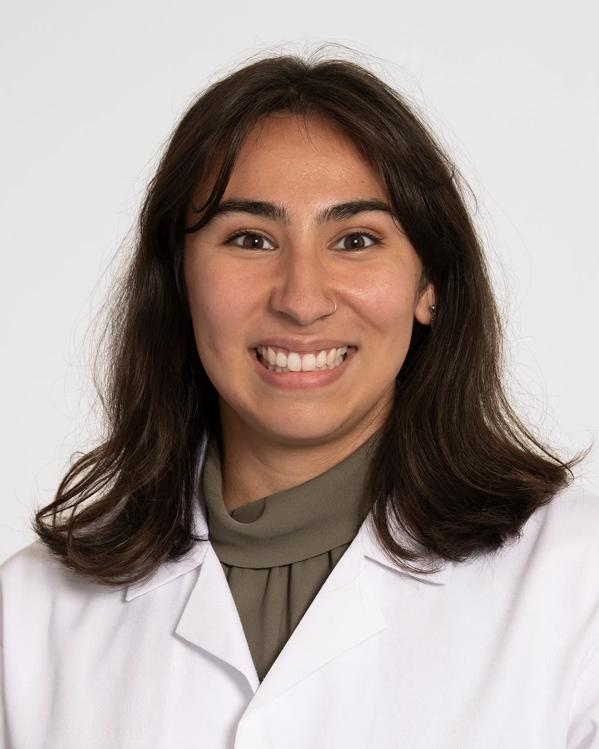
Tell us briefly about yourself.
I grew up in Chicago, got my undergraduate degree in chemistry from Princeton University, New Jersey, and then moved across the country to San Francisco to start a two-year research fellowship at the University of California, doing CAR-T and other immunologic development for hematologic malignancies. I quickly fell in love with the San Francisco food scene, hiking and weekend runs across the Golden Gate Bridge.
Now I’m happy to be back in the Midwest and at CCLCM, where I’ve found some incredible friends, mentors and colleagues. Soon I’ll be applying for an orthopaedic surgery residency.
Why did you choose CCLCM?
I had been deciding between an MD/PhD and MD track, and my decision to possibly pursue a surgical specialty pushed me toward the MD track. Because I wanted research to feature prominently in my medical education and future career, I sought out schools that heavily incorporated research into the curricula. At CCLCM, the built-in research thesis and grades-free philosophy — this allows students to more freely pursue research opportunities — stood out to me. I knew this would be a place I’d be both lucky and happy to attend.
What is one of your favorite experiences at CCLCM thus far?
One of my favorite memories was serving as an orientation leader for the incoming medical school class. It was so fun to work with my closest friends to plan scavenger hunts, ice breakers and AMAs [Ask Me Anythings] for the new students to learn more about the program and their classmates.
Tell us about your research year project.
I am very passionate about expanding female visibility in orthopaedic literature. For a long time, it was believed that whatever research was conducted on males would transfer to females, but that simply isn’t the case. I wanted my thesis to focus on understanding where female athletes differ from their male counterparts after anterior cruciate ligament (ACL) reconstruction (ACLR) and figuring out why these differences exist.
In previous research, I found that female sex was repeatedly correlated with lower activity scores at 2, 6 and 10 postoperative years. My thesis focused on generating a causative model to investigate females’ lower activity levels at two years after ACLR. We conceptualized a hypothetical randomized control trial in which male and female participants were separated into two study arms based on sex, randomized to different combinations of sport and ACL graft type, and were followed over two years to assess their activity level. We found that for males and females, graft choice and sport did not cause differences in activity levels in either males or females.
How do you manage stress?
Usually, if I’m feeling overwhelmed, I’ll try to fit in a quick run or lift at the gym. If the stress hits after a long day in clinic or the OR and there’s not enough energy left for a full workout session, I’ll bake cookies or cuddle up on the couch with my Bernese Mountain Dog, Sully, and distract myself with a rom-com movie.
What advice would you give to new CCLCM students?
Take your time finding yourself a mentor; the first physician you work with doesn’t have to be the one you stay with. I think we’re eager to join a big lab when we first start out so we can get some exposure to what’s out there. This can be a rewarding strategy, but you can always cold email people whose research sounds up your alley, even if they haven’t worked with medical students before. Some of my strongest relationships were built with physicians I emailed and were relatively new to mentoring students. I have found that this can provide two things: more freedom in deciding what research you’d like to work on and more individualized time with mentors.
How do you fill your spare time?
I enjoy training for triathlons, hosting dinner parties for my friends, reading pieces on food journalism and walking Sully through the Metroparks.
Tell us a fun fact about yourself.
I worked as sales rep, fitting people for running shoes, at a running shoe store during my time in med school!