Locations:




 Search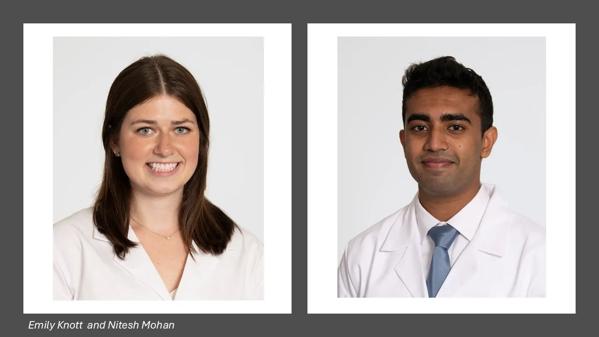
The Cleveland Clinic Lerner of College of Medicine of Case Western Reserve University (CCLCM) is a five-year program dedicated to developing the next generation of physician investigators. During their first year, students are assigned dedicated physician and research advisors to help ensure they reach their educational goals. In their fourth year, students work with a mentor to develop a master’s-level thesis in basic science, translational medicine, clinical medicine or health systems. When the students graduate, they each receive an MD with Special Qualification in Biomedical Research from Case Western Reserve University.
The research in which students are involved is critical, timely and often results in presentations at national conferences and publication in scholarly journals. The examples below briefly describe two students’ research projects, one that involves improving prostate MR image quality, and another that involves using eye imaging to study cardiovascular health:
“During my research year, I was mentored by Andrei Purysko, MD, on projects focused on prostate magnetic resonance imaging (MRI). MRI is used to detect, stage and monitor patients with prostate cancer. However, MRI accuracy varies widely across institutions, in part because of challenges with achieving consistent image quality.
“My thesis focused on improving prostate MR image quality. We standardized patient preparation and imaging protocols, created a quality control process and trained technologists to troubleshoot common artifacts. Over the course of the initiative, the rate of optimal quality scans increased from 67% to 84% (p<0.001). Improved image quality was associated with a higher positive predictive value for prostate cancer detection.
“We believe this work represents an important step toward more accurate prostate MRI at Cleveland Clinic and may guide similar initiatives at other centers to more broadly improve prostate cancer imaging.”
-Emily Knott (’26)
“During my research year, I worked with Sumit Sharma, MD, and Sunil Srivastava, MD, to study whether images of a patient’s retina (fundus photographs) could be used to provide information about overall cardiovascular health.
“The retina contains many small blood vessels that can be photographed noninvasively during a routine eye exam, making it a potential window into the body’s circulation. We completed several related projects, including testing whether deep learning models could predict coronary artery calcium score (a CT-based measure of plaque buildup in the heart’s arteries) from retinal images and developing tools to precisely measure retinal blood vessel features such as width and branching patterns. The vascular measurement tools allowed us to track subtle changes in retinal blood vessels over time, including changes observed after patients started cholesterol-lowering medications.
“Clinically, this work suggests that routine eye imaging may offer complementary information about vascular health and treatment response, particularly in preventive care settings where noninvasive monitoring is valuable. Overall, this research explored how eye imaging can be used not only to detect eye disease but also to study systemic vascular health in a practical, patient-friendly way.”
-Nitesh Mohan (’26)