Locations:





Program empowers start-up companies to conduct breakthrough quantum computing research with access to Cleveland Clinic’s IBM Quantum System One
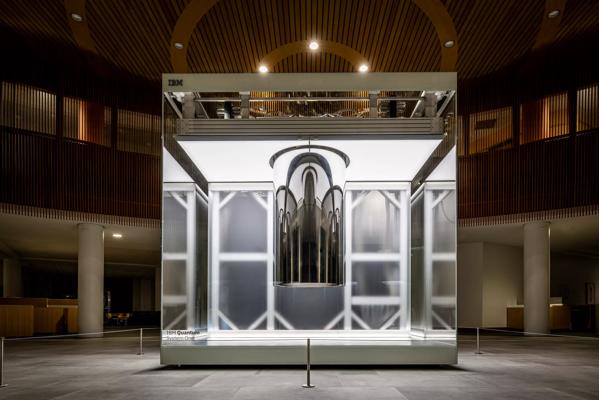
The Cleveland Clinic Quantum Innovation Catalyzer Program announced its newest cohort of start-up company awardees advancing quantum computing applications in healthcare and life sciences.
The competitive program selected three early- and venture-stage companies from around the world that are using quantum computing to advance research and patient care. The awards support a wide array of research goals, including investigating how genetic variants cause rare diseases; enhancing AI to predict drug toxicity; and building quantum-enhanced simulations to predict real-time cardiovascular risk.
Cleveland Clinic researchers will support the companies by providing expert guidance and access to IBM Quantum System One at Cleveland Clinic Main Campus, the first quantum computer dedicated to healthcare and life sciences research. Launched in 2023, the Cleveland Clinic Quantum Innovation Catalyzer Program provides early- and venture-stage companies with a 12-month immersive experience to explore quantum computing applications in biomedical research.
“This unique program helps us connect with companies that have the potential to shape the future of healthcare through advanced computational methods,” said Lara Jehi, M.D., Cleveland Clinic’s Chief Research Information Officer and the Sondra J. and Stephen R. Hardis Endowed Chair for Research and Technology. “By collaborating with local and international start-up companies, we are building a quantum computing ecosystem that will help advance biomedical research and improve the lives of patients everywhere.”
Through the program, the companies can collaborate and consult with Cleveland Clinic quantum and biomedical researchers in a growing quantum ecosystem catalyzed by the Cleveland Clinic-IBM Discovery Accelerator, a 10-year partnership aimed at advancing biomedical research through pioneering applications of quantum and advanced computing. This year’s selected companies will also receive an investment of up to $250,000 from K5 Tokyo Black Fund with an in-kind match from Cleveland Clinic.
“These companies represent the kind of ambitious, forward-looking innovation that can unlock meaningful advances in healthcare, and we are excited to support them through the Quantum Innovation Catalyzer Program,” said Keenan Rice, General Partner at K5 Global. “We are proud to work alongside Cleveland Clinic to help accelerate the next generation of quantum-enabled healthcare solutions.”
EntangleBio
About: EntangleBio is building a new computational approach to understanding disease by combining network medicine with quantum computing. The company is based in the United States and operates as an internationally distributed team with its founders and collaborators based across the U.S. and Europe, allowing them to work closely with leading academic institutions and research centers.
Project: Quantum network medicine for rare genetic disease diagnosis and treatment. EntangleBio plans to discover the root cause of rare diseases by exploring genetic variants that are not harmful on their own, but cause disease when they interact. The team aims to identify new therapeutic targets and improve drug repurposing.
Polaris Quantum Biotech
About: Polaris Quantum Biotech is working to revolutionize drug design through advanced computing and personalized medicine. The company, based in North Carolina, built the first drug-discovery platform using quantum computers.
Project: Quantum ML for accurate toxicity prediction. This team plans to develop a Quantum Machine Learning suite to significantly enhance AI models for predicting Absorption, Distribution, Metabolism, Excretion, and Toxicity properties, a critical bottleneck in modern drug discovery.
Singularity Quantum
About: Singularity Quantum Inc. develops quantum-enhanced biomechanical modeling technologies to support precision treatment decisions. The company maintains an international presence, with operations in Seoul, South Korea; California; and the University of Maryland’s Quantum Startup Foundry, as well as collaborations with leading academic and clinical institutions across the United States.
Project: Quantum algorithms for cardiovascular FFR simulation and tumor microcirculation modeling. This project will focus on building quantum-enhanced simulations that will create real-time cardiovascular risk prediction directly from imaging data. This aims to enhance cardiovascular care by providing non-invasive coronary insights and creating a scalable platform for personalized medicine. The same modeling framework may also be extended to tumor microcirculation and drug-delivery dynamics to support future precision oncology applications.
The inaugural class of Cleveland Clinic’s Quantum Innovation Catalyzer Program included Ohio-based Qradle and Finland-based Algorithmiq. Both organizations have continued to collaborate with Cleveland Clinic on groundbreaking research with quantum technologies.
Algorithmiq: Algorithmiq led a project in collaboration with Cleveland Clinic and IBM to create a set of computational tools that aims to explore how quantum computing could assist in the development of photon-activated drugs for cancer. The project was selected as one of only six teams worldwide – from an initial pool of more than 200. The project has secured funding across all three phases of Wellcome Leap’s Quantum for Bio Challenge, a competitive global initiative advancing quantum computing applications for healthcare and life sciences.
Qradle: Qiang Guan, Ph.D., from Qradle Inc., collaborated with Feixiong Cheng, Ph.D., Cleveland Clinic, to predict protein folding structures. Their work demonstrated, for the first time, a complete end-to-end pipeline for biologically relevant structure prediction on real quantum hardware, highlighting its engineering feasibility and practical advantage over existing classical and deep learning approaches. The results have outperformed the accuracy of AlphaFold 3.
Disclaimer from K5: This material is provided for informational purposes only and does not constitute investment advice or an offer to sell or solicitation of an offer to buy any securities. Companies referenced are participants in the Quantum Innovation Catalyzer Program. Statements regarding future outcomes are forward-looking and are not guarantees of future results. References to third-party organizations do not constitute endorsements.




 Search