Locations:





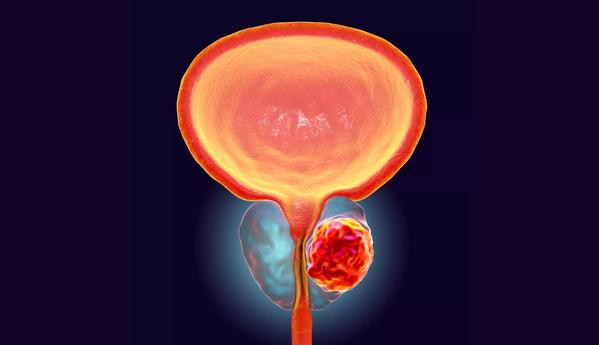
According to new findings published in Science Translational Medicine, Cleveland Clinic researchers have identified a promising drug target for treating and preventing aggressive, drug-resistant prostate cancer.

Image content: This image is available to view online.
View image online (https://newsroom.wordpress.clevelandclinic.org/wp-content/uploads/sites/4/2018/06/Sharifi-2015-in-lab-300x200.jpg)
Nima Sharifi, M.D.
The team, led by Nima Sharifi, M.D., of Cleveland Clinic’s Lerner Research Institute, demonstrated that inhibiting the protein H6PD led to significantly reduced tumor sizes and improved survival among mouse models with drug-resistant prostate cancer. The H6PD levels also were elevated in biopsied patient tumors, suggesting the protein might be targeted in patients for treatment.
“New treatment approaches for drug-resistant prostate cancer are desperately needed,” said Dr. Sharifi, director of Cleveland Clinic’s Genitourinary Malignancies Research Center. “These findings suggest an entirely new strategy for treatment of men with this aggressive form of prostate cancer.”
Enzalutamide, a current standard-of-care hormone therapy for metastatic prostate cancer, works by blocking androgen receptors, which are proteins that help drive cancer cells. While initially effective, most patients eventually develop resistance to the treatment. This resistance occurs when androgen receptors are blocked and cancer cells adapt to get their “fuel” from a similar receptor, called the glucocorticoid receptor.
These glucocorticoid receptors bind to and interact with the stress hormone cortisol. In an earlier study published in eLife, Dr. Sharifi and his team linked enzalutamide resistance to increased tumor cortisol levels. They found that tumors typically express a protein called 11β-HSD2, which inactivates cortisol. However, when this protein expression is inhibited in some tumors, cortisol and the glucocorticoid receptor are stimulated and become available for use by cancer cells.
“Taken together, our study findings suggest that pharmacologically inhibiting the H6PD protein can reverse drug resistance in prostate cancer cells,” said Dr. Sharifi. “By blocking this protein, we are able to prevent cancer cells from utilizing their backup fuel supply – cortisol and its receptor. When we block this pathway, tumors begin to become responsive to standard treatments again.”
In this new study, the researchers demonstrated that, in addition to decreased expression of 11β-HSD2, resistant tumors also have increased H6PD levels.
“With lower levels of 11β-HSD2, which normally functions to cut off the fuel supply to drug-resistant cancer cells, the cells are free to continue to grow and spread unchecked,” said Dr. Sharifi. “By inhibiting the H6PD protein, however, we were able to reinstate anti-cortisol effects. This finding is key to better understanding how disruptions in cortisol metabolism contribute to cancer cells’ growth and spread.”
Dr. Sharifi’s clinical collaborator Eric Klein, M.D., chair of Cleveland Clinic’s Urology & Kidney Institute and a co-author on the study, said, “We found elevated levels of H6PD in both animal models and patient tissues, particularly after treating tumors with enzalutamide. These findings hold promise for novel precision medicine approaches in the management of men with aggressive prostate cancer.”
The researchers targeted H6PD with rucaparib, a drug already approved by the U.S. Food and Drug Administration. Dr. Sharifi collaborated with scientists from Cleveland Clinic’s Center for Therapeutics Discovery to identify what parts of rucaparib are chemically necessary to inhibit the protein.
Researchers administered enzalutamide to mouse models of aggressive prostate cancer that expressed H6PD and those where the protein was blocked with rucaparib. The models where H6PD was blocked had significantly smaller tumors and longer progression-free survival following enzalutamide treatment.
Jianneng Li, PhD, a post-doctoral fellow in Dr. Sharifi’s lab, is first author on the study, which was supported by the National Cancer Institute and the Prostate Cancer Foundation.
“These findings represent an exciting new opportunity to potentially reverse drug resistance in advanced prostate cancer,” said Howard R. Soule, PhD, Executive Vice President and Chief Science Officer of the Prostate Cancer Foundation. “PCF commends Dr. Sharifi and the team on their achievement and proudly supports their work to bring us closer to our mission to eliminate death and suffering from prostate cancer.”
Cleveland Clinic is a nonprofit multispecialty academic medical center that integrates clinical and hospital care with research and education. Founded in 1921 by four renowned physicians with a vision of providing outstanding patient care based upon the principles of cooperation, compassion and innovation, Cleveland Clinic has pioneered many medical breakthroughs, including coronary artery bypass surgery and the first face transplant in the United States. Cleveland Clinic is consistently recognized in the U.S. and throughout the world for its expertise and care. Among Cleveland Clinic’s 83,000 employees worldwide are more than 6,600 salaried physicians and researchers, and 21,900 registered nurses and advanced practice providers, representing 140 medical specialties and subspecialties. Cleveland Clinic is a 6,725-bed health system that includes a 173-acre main campus near downtown Cleveland, 23 hospitals, 300 outpatient facilities, including locations in northeast Ohio; Florida; Las Vegas, Nevada; Toronto, Canada; Abu Dhabi, UAE; and London, England. In 2025, there were 15.9 million outpatient encounters, 343,000 hospital admissions and observations, and 336,000 surgeries and procedures throughout Cleveland Clinic’s health system. Visit us at clevelandclinic.org. Follow us at x.com/CleClinicNews. News and resources are available at newsroom.clevelandclinic.org.
Editor’s Note: Cleveland Clinic News Service is available to provide broadcast-quality interviews and B-roll upon request.





 Search