Locations:





Analysis of nearly 8,000 adults found 45% keep the weight off after one year

As the use of injectable GLP-1 drugs continues to rise, questions persist about what happens after patients stop taking them in real-world settings.
A new Cleveland Clinic analysis of nearly 8,000 patients suggests that discontinuing semaglutide and tirzepatide, on average, does not lead to significant weight regain in clinical practice, as many patients later restart the original medication or try an alternative obesity treatment.
In one of the largest real-world studies to date examining obesity treatment use and long-term weight changes after GLP-1 discontinuation, researchers at Cleveland Clinic found that many patients successfully stabilized their weight after one year through alternative treatments and therapeutic lifestyle interventions.
The findings, published in the journal Diabetes, Obesity and Metabolism, provide real-world context to previous randomized clinical trials indicating that patients who stopped semaglutide (sold under the brand names Ozempic/Wegovy) and tirzepatide (sold under the brand names Mounjaro/Zepbound) regained more than half of the weight they lost within 12 months.
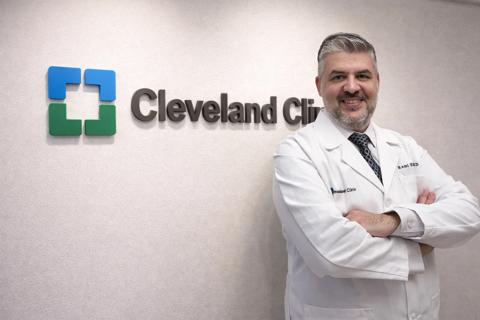
Hamlet Gasoyan, DS, PhD, MPH, a researcher with Cleveland Clinic's Center for Value-Based Care Research, led the study.
“Our real‑world data show that many patients who stop semaglutide or tirzepatide restart the medication or transition to another obesity treatment, which may explain why they regain less weight than patients in randomized trials,” Dr. Gasoyan said.
This retrospective cohort study included 7,938 adult patients with obesity or overweight in Ohio and Florida. All patients initiated injectable semaglutide or tirzepatide for obesity or type 2 diabetes and stopped the medication within three to 12 months. Dr. Gasoyan and his research team analyzed what treatments patients pursued next and how their weight changed over time.
While patients in the study achieved meaningful weight loss, individual results varied:
The research group earlier documented two primary drivers that contributed to patients stopping their medication: cost or insurance coverage limitations and side effects, with the former being the dominant reason. Individuals taking the drugs for diabetes were more likely to restart the medication compared with those using them for obesity, a difference associated with more consistent insurance coverage for diabetes-related prescriptions.
Overall, many patients in both groups explored other weight-management treatment options within 12 months of stopping their initial GLP-1 injectable:
Researchers say the findings underscore the importance of personalized, ongoing support for patients seeking obesity treatment – even when they stop medication.
“Many patients do not give up on their obesity treatment journey, even if they need to stop their initial medication,” said Dr. Gasoyan. “In our future work, we will examine the comparative effectiveness of alternative treatment options for obesity in patients who discontinue semaglutide or tirzepatide, to help patients and their clinicians make informed decisions.”
Cleveland Clinic is a nonprofit multispecialty academic medical center that integrates clinical and hospital care with research and education. Founded in 1921 by four renowned physicians with a vision of providing outstanding patient care based upon the principles of cooperation, compassion and innovation, Cleveland Clinic has pioneered many medical breakthroughs, including coronary artery bypass surgery and the first face transplant in the United States. Cleveland Clinic is consistently recognized in the U.S. and throughout the world for its expertise and care. Among Cleveland Clinic’s 83,000 employees worldwide are more than 6,600 salaried physicians and researchers, and 21,900 registered nurses and advanced practice providers, representing 140 medical specialties and subspecialties. Cleveland Clinic is a 6,725-bed health system that includes a 173-acre main campus near downtown Cleveland, 23 hospitals, 300 outpatient facilities, including locations in northeast Ohio; Florida; Las Vegas, Nevada; Toronto, Canada; Abu Dhabi, UAE; and London, England. In 2025, there were 15.9 million outpatient encounters, 343,000 hospital admissions and observations, and 336,000 surgeries and procedures throughout Cleveland Clinic’s health system. Visit us at clevelandclinic.org. Follow us at x.com/CleClinicNews. News and resources are available at newsroom.clevelandclinic.org.
Editor’s Note: Cleveland Clinic News Service is available to provide broadcast-quality interviews and B-roll upon request.






 Search