Locations:




Cleveland Clinic Innovations is proud to highlight the creativity and problem-solving spirit of our nurses through the Nurse Inventor Spotlight series. This series highlights nurses’ innovation journeys, inspirations, how nurses and teams identify unmet needs, and the impact of unmet needs and innovations on patients and caregivers.

This edition features Paul Kambies, BSN, RN, whose firsthand experience on a vascular surgery step-down floor and emergency department inspired him to improve the management of incontinence for bedridden patients. Paul shares how his collaboration with Cleveland Clinic Innovations helped transform his idea into a product with the potential to enhance patient care and caregiver efficiency.
Q: Can you share your background, including what led you to make a mid-career shift into nursing and your current role at Cleveland Clinic?
A: Before becoming a nurse, I earned an Industrial Technology degree and worked in various manufacturing facilities. However, I was always interested in medicine and had started taking prerequisite courses with the goal of becoming a nurse.
My decision to make the mid-career shift was personal. During that time, my daughter had a febrile seizure that led to her being intubated and transferred from Cleveland Clinic Hillcrest Pediatric Emergency Department to Cleveland Clinic’s Main Campus. Watching her go through that experience was incredibly difficult. I felt powerless, unsure of what was happening, and completely at the mercy of the medical team. That moment solidified my commitment to finishing nursing school.
I’ve been with Cleveland Clinic for nine years. I started as a vascular surgery step-down nurse at Cleveland Clinic Main Campus then moved to Cleveland Clinic Euclid Hospital’s Emergency Department (ED). I have since transitioned to work as a physician specialist for ED providers across the enterprise. In this role I provide Epic training and support to ED physicians, and Advance Practice Providers. To stay connected to patient care, I work one shift a week in the Euclid Hospital ED as a nurse. Clinical work keeps my clinical skills sharp and provides valuable insight into the software I help support.
Q: What aspects of your role inspire you the most?
A: What inspires me most is the strong sense of teamwork and shared purpose. In previous industries I worked in, like engineering, people were often more focused on profit or design goals. Here, everyone is genuinely committed to the same mission: providing the best possible care to patients.
It’s inspiring to see how unified the team is, with every person driven by the desire to treat patients with compassion and dignity, the way they would want their own loved ones to be treated. Even with challenges of limited resources, the dedication to delivering exceptional care never wavers. Witnessing that level of commitment day in and day out is incredibly motivating.
Q: What does innovation mean to you?
A: Innovation is about fixing the things that frustrate you. When you question why something is done a certain way, that is an opportunity for improvement. Many of the processes we now take for granted once started with someone saying, “This doesn’t make sense, there has to be a better way.” It takes the willingness to push against the momentum and suggest a novel approach, which can become the new standard.
I always encourage my colleagues to speak up when something feels inefficient or outdated. If it seems like there could be an easier or better way, there probably is. Asking those questions and challenging the norm is where real innovation begins.
Q: What problem were you seeking to solve?
A: The problem stemmed from my time working on a vascular surgery step-down floor. Many patients must manage incontinence and require monitoring of urine output during a hospital stay. For bedridden patients, this can be a significant issue with potentially profound consequences. Incontinence can lead to skin breakdown, discomfort, and emotional distress for the patient. It also demands substantial staff time and resources for frequent bed changes and cleanups. I realized there was a gap within existing solutions, like indwelling catheters or external devices, as they were not always appropriate or effective. I started thinking about how we could develop a product to better serve this overlooked population, ensuring they receive the same dignity and comfort as others.
Q: How have you worked with Cleveland Clinic Innovations throughout the innovation process?
A: Collaborating with Cleveland Clinic Innovations throughout this process has been incredibly smooth, supportive, and educational. I’ve worked closely with the engineering team, submitting my initial drawings, and brainstormed what might or might not work. Their invaluable guidance helped me tweak the design to preserve intellectual property and avoid conflicts with existing patents. I have worked on two different prototype versions with the team’s guidance. I’ve gained insight into the difference between prototyping and large-scale manufacturing. Turning an idea into a product involves many moving pieces. It is not as simple as having a concept on paper; there are engineering groups, clinical experts, and multiple stakeholders involved. For example, while our prototype is 3D printed over a 24-hour period, that is not feasible for mass production. Working with the engineers on material selection and refining the assembly process has helped us focus on efficiency and cost-effectiveness. The scale and complexity of the process have been both challenging and rewarding, and I am grateful for the collaboration and expertise that made it possible.
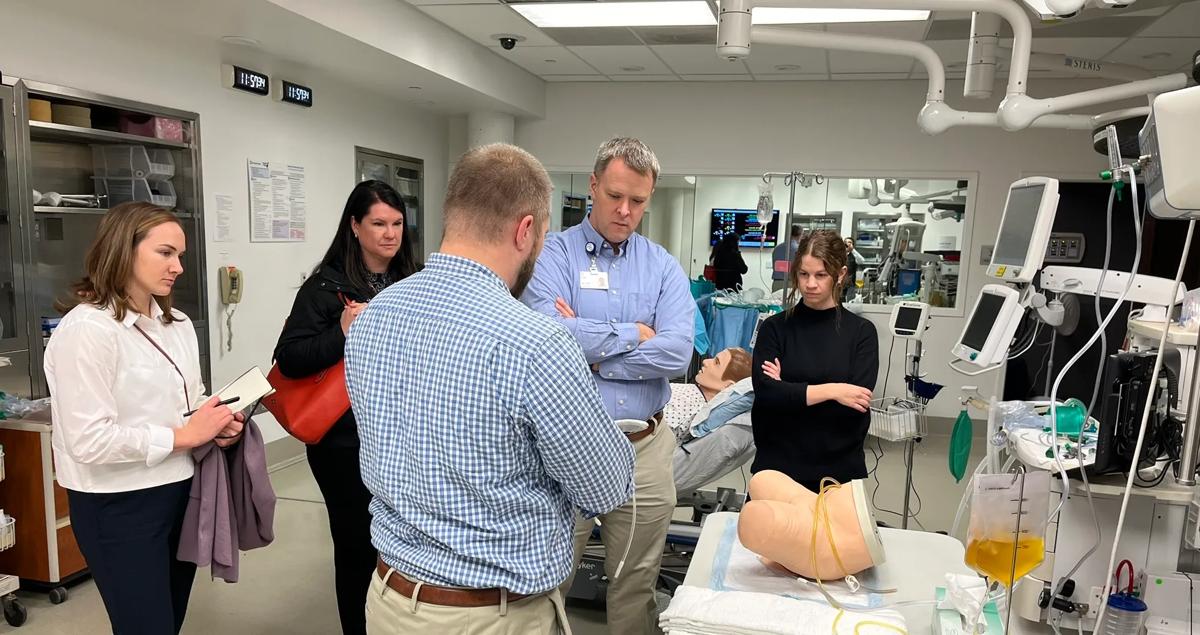
Image content: This image is available to view online.
View image online (https://assets.clevelandclinic.org/transform/9f5f8cfc-d7f2-43ab-80b0-46ee31882e47/Image_Paul-Kambies_Nurse-Inventor-Spotlight)
Q: What is the current status of your invention?
A: The invention is currently in the prototype phase. We expect to receive one or two physical prototypes soon for hands-on testing. Once we complete the testing, we will move forward with discussions on how to refine the design for mass production — focusing on making it efficient and scalable.
Q: Can you describe what the process has been like for you as you have worked through the invention journey, and what has surprised you the most about it so far?
A: It’s been a long journey. I initially submitted the idea back in October 2020, so it has been several years in the making. While I didn’t have specific expectations going into it, the experience has been overwhelmingly positive. The team has been incredibly helpful and supportive throughout the process, and there are a lot of resources available. I have encouraged my colleagues to submit their own ideas and tell them it’s not as daunting as it might seem. The team walks you through everything, and the process is much more accessible than people might expect.
Overall, it has been a great learning experience, and it has motivated me to continue submitting more ideas. Now that I have seen how smooth and collaborative the process can be, I am even more inspired to keep innovating.
Q: How has your engineering background influenced your approach to innovation?
A: The industrial technology coursework emphasized hands-on learning before theory. We would take things apart to understand how they worked, which shaped my problem-solving mindset. One of the first things I did when I had my idea was to take apart other products to see how they functioned. Knowing the internal mechanisms helped me create my vision.
I also have seen the impact small improvements can make. Even if my invention only helps 10% of patients needing an external urinary collection device, it still reduces complications and saves nurses' valuable time. In a large organization like Cleveland Clinic, small ideas can scale quickly, creating a significant impact on efficiency and patient safety.
Q: How is this going to impact caregivers and patients?
A: I am hopeful this will have a significant positive impact. People who haven’t worked in healthcare may not realize how time-intensive and physically demanding it is to roll and change a patient for the staff. Or consider how frustrating and embarrassing having others help change your bedding may be. The hope is that through this product, we can improve both patient dignity and caregiver efficiency, ultimately enhancing safety and care quality.
Q: Are there any innovative nurses or people in your field that you have been following or that have inspired you?
A: It is difficult to single out one person because I am inspired by so many of my colleagues. When I first started as a nurse in the vascular surgery step-down department, the team was incredible, supporting my growth and helping me learn on a challenging floor with complex patients. The nurses in the ED are also constantly innovating, finding creative solutions to provide the best care, even when faced with adversity. Whether it is figuring out how to maximize limited space and resources or using equipment in inventive ways, their dedication to patient care drives them to think outside the box. The creativity and resilience of the people I work with is truly inspiring.
Q: What advice would you give to someone at Cleveland Clinic who might be interested in innovating?
A: Recognize that anything that frustrates you is an opportunity for improvement. If you think something could be done better, chances are others feel the same way; it just takes someone to start the process. Don’t be nervous or embarrassed about sharing your idea. Even if it’s not perfect, it could spark other solutions or evolve through collaboration. The innovation process at Cleveland Clinic isn’t overwhelming—it is straightforward, and there is plenty of support along the way. The key is to take that first step and trust that your idea could make a meaningful impact.
Nursing Institute leadership encourages caregivers to be the next nursing innovator! Step forward with your innovative idea by submitting your idea on the Nursing Innovation’s Step Forward Portal.




 Search