Locations:





 Search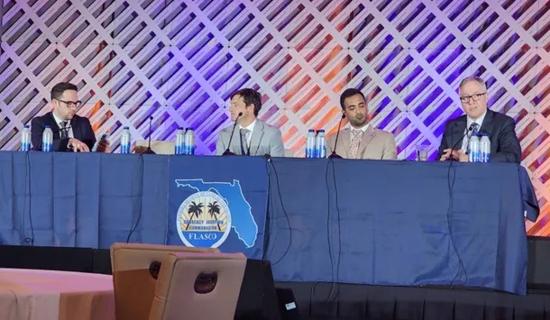
Bernardo Perez-Villa, MD, MSc, Senior Engagement Partner for Cleveland Clinic Innovations, Florida Market shares insights on the future of AI integration in oncology alongside leading experts from UVA Health, Baptist Health South Florida, and Tempus AI.
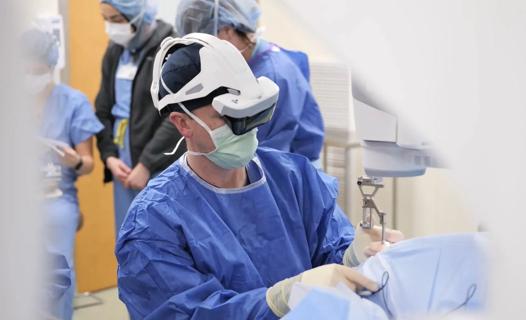
At the forefront of ophthalmic innovation, Justis P. Ehlers, MD, FASRS, and Sunil Srivastava, MD, of Cleveland Clinic's Cole Eye Institute are advancing retinal care through AI-powered imaging technology that provides real-time surgical guidance and personalized treatment plans. Their work integrates artificial intelligence with advanced optical imaging to treat retinal diseases with unprecedented precision, establishing new standards for ophthalmology while accelerating drug development processes.
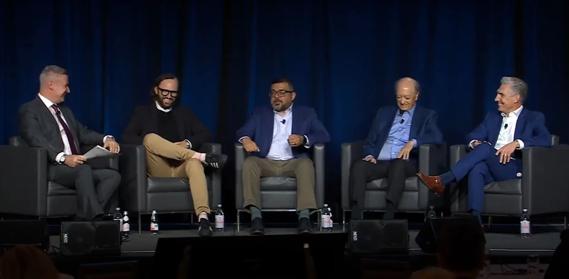
Cleveland Clinic's Discovery and Innovation Forum brought together distinguished healthcare technology leaders to address the critical challenge of scaling medical innovation from laboratory breakthrough to commercial success. Led by Geoff Vince, PhD, Chief of Cleveland Clinic Innovations and Department Chair of Biomedical Engineering, the panel "From Science to Commercialization: How Do We Scale Healthcare Innovation?" emphasized that successful healthcare commercialization requires a problem-first innovation strategy and seamless integration into clinical workflows.
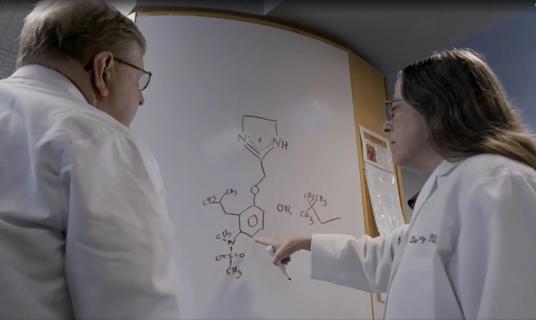
At the forefront of Alzheimer's disease research and neurodegenerative therapeutics, Dianne Perez, PhD, of Cleveland Clinic is enhancing treatment through pioneering work in allosteric modulation and precision medicine. Her research on the novel α₁ₐ-adrenergic receptor modulator CCF219B spans from cognitive enhancement to neuroprotection, marking a potentially transformative era in Alzheimer's therapeutic solutions.
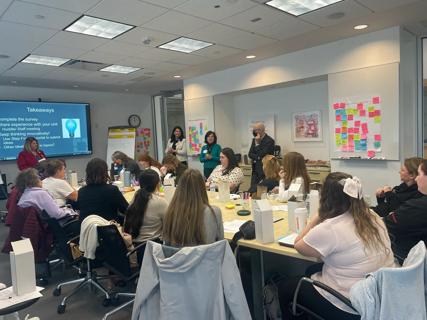
Cleveland Clinic's Nursing Institute hosted an ideation session where 20+ nursing and pharmacy caregivers collaborated to address medication administration safety challenges, generating over 224 unique ideas aimed at enhancing patient safety and reducing workflow inefficiencies in the inpatient setting.
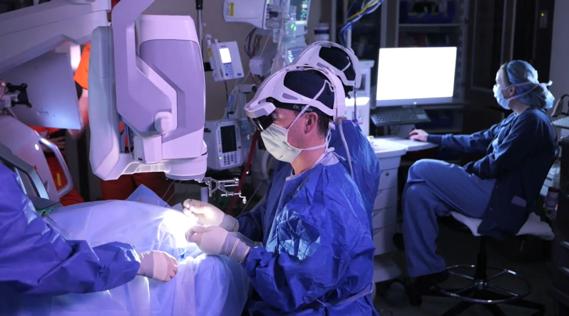
Cleveland Clinic inventors have pioneered AI-driven software that analyzes retinal imaging data with unprecedented precision. Led by Justis P. Ehlers, MD, and Sunil Srivastava, MD, this technology extracts critical information from optical coherence tomography scans to enhance disease detection, predict treatment outcomes, and establish new endpoints for clinical trials in ophthalmology.
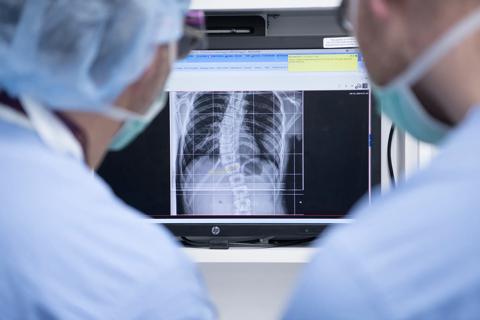
Cleveland Clinic's Innovation Fellows program has sparked the development of PowerCut, a tool modernizing spinal rod manipulation techniques unchanged for decades. Advanced through the collaborative work of Kyle O'Laughlin, MS, Lead Research Technologist, Biomedical Engineering, Cleveland Clinic, this device aims to transform scoliosis surgeries by replacing manual bending methods with a smaller, more efficient alternative that streamlines procedures and expands capabilities across surgical teams.

Cleveland Clinic Innovations is proud to highlight the creativity and problem-solving spirit of our nurses through the Nurse Inventor Spotlight series. This series highlights nurses’ innovation journeys, inspirations, how nurses and teams identify unmet needs, and the impact of unmet needs and innovations on patients and caregivers.