Locations:




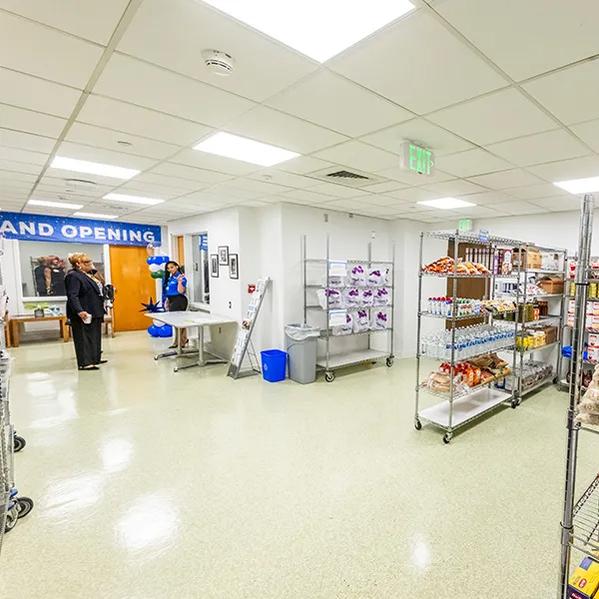
With support from a Catalyst Grant, the newly opened Community Resource Center at Cleveland Clinic Euclid Hospital is helping to bridge medical care and access to essential social support and resources.
Sundrea Wilcox, MA, has spent nearly 20 years serving her community with compassion, integrity and purpose. As a leader in Community Health at Cleveland Clinic Euclid Hospital, she has seen firsthand how social determinants of health — like food insecurity, housing instability and limited access to technology — can affect some of our most vulnerable patients.
Determined to do more, Sundrea turned insight into action. With the support of a Catalyst Grant, she and her colleagues opened the Community Resource Center at Euclid Hospital, which now helps to bridge medical care and essential social support.
“Patients view this hospital as a safe haven,” says Sundrea. “I don’t want people leaving in the same despair they arrived in. We are fully closing the loop and making sure everyone leaves knowing Euclid Hospital took care of them.”
Patients are screened during registration, and those in need are connected to vital resources before they leave: nonperishable food, fresh clothes, hygiene items and critical connections to social services. The center also includes a computer lab, where patients can log into MyChart, schedule follow-up appointments and participate in digital literacy classes, which is especially important because some people do not have internet access at home.
“This project is about meeting people where they are — not assuming that just because we offer support, they have access to it,” says Sundrea. “We’re trying to transform lives by being preventative, making sure patients leave with what they need and know that if they ever have to come back, we’ll be here for them again.”
Catalyst Grants are funded annually by thousands of gifts of all sizes from donors. The competitive grants are awarded to caregivers with ideas to improve the lives of Cleveland Clinic patients, the organization and communities around the world. Sundrea was awarded about $34,000.
“I literally screamed when I got the Catalyst Grant,” says Sundrea. “It was amazing, and I’m so grateful to have brought this to the community. This is for everyone, even caregivers. We’re one community. It’s about building sustainable, meaningful programs with our partners, like the Greater Cleveland Food Bank, that truly reflect change.”
Sundrea feels she’s living her purpose, and she’s energized for what comes next. With the Community Resource Center now thriving, she’s focused on expanding its reach, deepening partnerships and continuing to remove barriers to healing.
 Search