Locations:




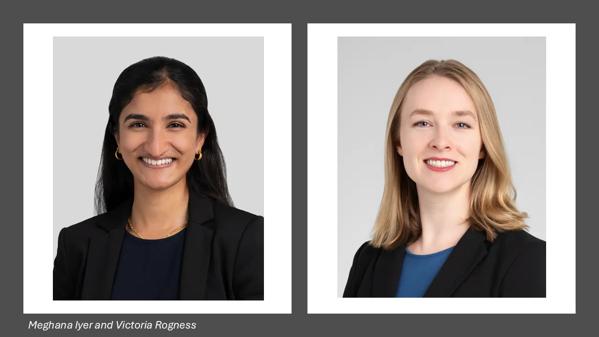
The Cleveland Clinic Lerner of College of Medicine of Case Western Reserve University (CCLCM) is a five-year program dedicated to developing the next generation of physician investigators. During their first year, students are assigned dedicated physician and research advisors to help ensure they reach their educational goals. In their fourth year, students work with a mentor to develop a master’s-level thesis in basic science, translational medicine, clinical medicine or health systems. When the students graduate, they each receive an MD with Special Qualification in Biomedical Research from Case Western Reserve University.
The research in which students are involved is critical, timely and often results in presentations at national conferences and publication in scholarly journals. The examples below briefly describe two students’ research projects, one that involves clinical differences in atherosclerosis between males and females, and another that involves the long-term disease control in patients with chronic lymphocytic leukemia who were treated with ibrutinib:
“I completed my research project, ‘Genetic and Epigenetic Drivers of Sex Differences in Vascular Disease: Uncovering Sex-Specific Mechanisms through a Multi-Omics Approach,’ through the Sarnoff Fellowship Program under the mentorship of Paul Cheng, MD, PhD, and Juyong Brian Kim, MD, MPH, at Stanford University. In this project, I designed and led a multi-omics study to uncover why men and women experience atherosclerosis differently.
“I combined genome-wide association data, bulk and single-cell sequencing, and in vivo and in vitro atherosclerosis models drawn from multiple species to map sex-specific molecular programs in vascular cells. This integrated approach revealed distinct, cell-type-specific transcriptional and epigenetic signatures, especially involving X-linked histone demethylases, that drive divergent disease trajectories between males and females.
“These findings may explain known clinical differences in atherosclerosis between males and females, including why females tend to develop more fibrous plaques with endothelial dysfunction. These findings have been shared at the Society for Vascular Surgery Vascular Research Initiatives Conference, AHA Vascular Discovery Scientific Sessions and the Sarnoff Cardiovascular Research Foundation Annual Scientific Meeting, laying a foundation for precision-guided therapies that account for biological sex.”
-Meghana Iyer (’26)
“During my research year, I worked with Adrian Wiestner, MD, PhD, at the National Institutes of Health. One of my projects focused on studying long-term outcomes in patients with chronic lymphocytic leukemia (CLL), a type of blood cancer, treated with a targeted drug called ibrutinib. Some patients with CLL have higher-risk disease, particularly those with certain genetic changes, such as alterations in TP53, and historically have had poorer responses to treatment. While ibrutinib has improved outcomes, less is known about how patients fare after many years on this medication.
“This project focused on a phase 2 clinical trial of 84 high-risk patients followed for a median of 10 years. We found that ibrutinib controlled the disease for many years in most patients, with a median progression-free survival of 7.2 years. We also examined how deeply patients responded to treatment using a sensitive blood test that can detect very small amounts of cancer. A subset of patients (15.5%) reached levels where the cancer was no longer detectable in their blood and, in some cases, these deep responses lasted for years, even after stopping treatment. This suggests that responses to ibrutinib can continue to deepen over time.
“Overall, this work is the longest follow-up research published on ibrutinib outcomes and demonstrates that ibrutinib can provide long-lasting disease control in CLL. As more options for CLL treatment become available, our research may help guide future strategies in which some patients could safely stop treatment after achieving very strong responses.”
-Victoria Rogness (’26)




 Search