Locations:




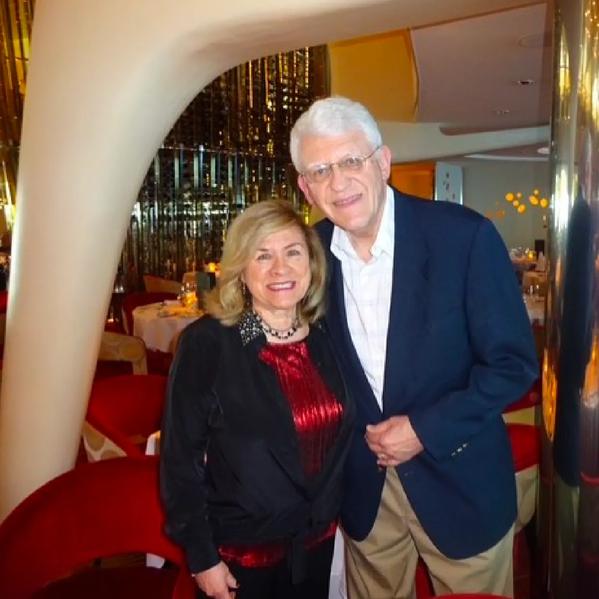
Sally and Don Messinger
While Don and Sally Messinger have nothing but praise and gratitude for Cleveland Clinic, they recognized – through a lifesaving experience – a way they might help improve outcomes for a specific population of medical staff and patients. So they stepped up with a $100,000 gift to serve a very specific purpose.
The longtime Cleveland-area residents insist, "There is no better way to use your money than to help somebody else."
Their story begins with a trip to the ER in 2022. Don had been a patient of the Cleveland Clinic Orthopaedic department for many years, but his symptoms this time suggested something might be off with his heart or nervous system.
"They did a bunch of tests to see what was going on but didn't find anything of concern," Don recalled. After two days of "every test in the universe," Don and Sally were preparing to leave the hospital when Neha Quatromoni, MD, a cardiologist they hadn't met before, asked if she could do one more test. Soon after that, Don was advised he had cardiac amyloidosis – a buildup of abnormal proteins in the heart. Don was specifically diagnosed with light-chain amyloidosis, where the abnormal proteins come from bone marrow. These proteins thicken the heart muscle, preventing it from working as it should and often leading to death.
Cardiac amyloidosis is considered rare and is often underdiagnosed because symptoms mirror those of many other diseases. Common symptoms are shortness of breath, high levels of protein in the patient's urine, swelling in the belly and legs, fatigue and heart palpitations. Don had none of these. But because amyloid can build up elsewhere in the body, a patient could exhibit other signs of the disease, including a history of carpal tunnel syndrome, spinal stenosis, prior shoulder surgery and hip or knee replacement – all of which Don had experienced.
"I've had bilateral carpal tunnel, both hips replaced, and my shoulders are shot," Don said. He also has been treated for spinal stenosis for more than 10 years. "I've had a lot of orthopaedic issues because the amyloid first deposits in the joints." Don pointed out, too, that his annual physicals didn't show amyloid in his heart or joints.
"The next step for me was a catheterization where they saw that the surface of my heart was thicker than normal, and I had a blockage in one of my valves," said Don. Following a valve replacement surgery, Don's medical team has been managing his disease with a compounded oral medication, formulated specifically for Don at the Specialty Pharmacy at Cleveland Clinic.
The Messingers requested their gift be used to educate medical professionals in orthopaedics about red flags that could help in the early diagnosis of cardiac amyloidosis and convey just how important early diagnosis is.
"We hope that our gift will also educate Cleveland Clinic orthopaedic patients about the symptoms of amyloidosis," said Don. "It's life threatening, so we are grateful beyond words that we're in Cleveland and that we go to Cleveland Clinic."
"This is not a simple problem," Sally cautioned. "We're hoping we make a difference in that somebody is diagnosed today because we gave money to Cleveland Clinic. That means the world to us."
"Every dollar we contribute we earned ourselves," Don added. "We feel fortunate that we're able to give back in this important way."
Sally is a 40-year top-performing real estate agent, currently with Howard Hanna, and Don is a corporate attorney with Thompson Hine, having been a member of the firm's executive committee and served as partner-in-charge of the firm's Cleveland office. They have three married sons and seven grandchildren they adore.
"This is our life," Don reflected. "We think we are the luckiest people on the face of the earth."
He added plainly: "This isn't a disease that you can live with forever. When it gets bad, your heart can't work. You can't reverse this one – but they're going to be able to do so someday. They're doing wonderful studies. The doctors are committed."
"We are so grateful," echoed Sally, "especially to Dr. Quatromoni, but to the whole cardio amyloidosis team. All are sensational. And to the people in orthopaedics who were treating Don. We just are very, very grateful."
 Search