Locations:




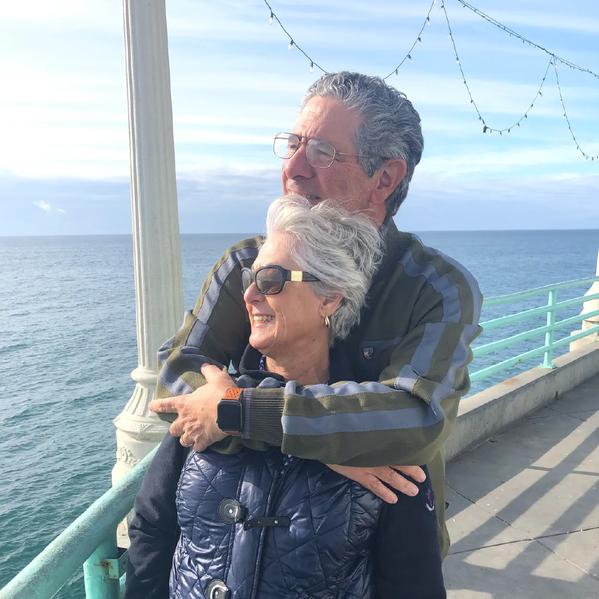
Leslie and Paul Karp
At 81, Paul Karp has a new appreciation for emergency medicine. A series of unexpected health challenges earlier this year resulted in three separate Emergency Department visits.
The first started with a dangerously low blood pressure reading during a scheduled cardiology appointment at Cleveland Clinic Tradition Hospital. Paul was quickly transported next door to the Emergency Department, where he was diagnosed with fluid around his heart – a potentially life-threatening condition.
Days later, he was back in the Emergency Department – this time at Cleveland Clinic Martin North Hospital – with chest pain brought on by pneumonia. Not long after, a third episode brought him again to Tradition Hospital, struggling to breathe due to fluid around his lungs.
Despite the physical toll, what stood out most to Paul was not the hardship – but the care. He consistently experienced excellent care at the hands of a warm and compassionate team of caregivers. He also saw firsthand the strain on emergency services and a system working hard to meet the needs of a growing community.
Those experiences and his continued recovery inspired Paul and his wife, Leslie, to give back.
“Cleveland Clinic has been a lifeline for me and our community,” says Paul. “Giving back is a way to say thank you.”
Married for 51 years, the couple moved to Palm City, Florida, from New York in 2003 after Paul retired from a 30-year career as an options specialist. Soon after, they became early members of the Barstow-Reed Society, a philanthropic group committed to advancing local healthcare. Today, 363 BRS members collectively contribute more than $7 million each year to support priorities at Cleveland Clinic Martin Health.
The Karps have designated their latest annual gift to support expanding the Emergency Department at Tradition Hospital – an investment that reflects both gratitude and a desire to help others receive timely care.
Since opening in 2013, Tradition Hospital has rapidly grown, going from 90 beds to 177 beds in its first four years. As the surrounding community continues to expand, so does demand for emergency and hospital services.
“The growth in and around Tradition is unbelievable, but the hardest thing to add is space,” Paul says.
To meet this need, Cleveland Clinic is expanding the Emergency Department and introducing a new ED Fast Track program. This initiative is designed to improve the patient experience by reducing wait times and ensuring patients receive the most appropriate level of care.
As part of the renovation, underutilized space will be converted into six Fast Track beds for patients with less severe conditions. The goal is to treat and discharge these patients within 90 minutes – freeing up critical resources for those facing more serious emergencies.
For Paul, supporting this expansion is a natural extension of his long-standing commitment to healthcare philanthropy. In fact, he was the very first patient to participate in the Guardian Angel Grateful Patient Program, following its launch at Martin Health in 2012.
After spending a week as a patient at Martin North Hospital, the Karps made a $50,000 gift to honor two nurses who went “above and beyond” during Paul’s stay.
The Guardian Angel program allows grateful patients and families to honor caregivers who have made an impact on their lives while helping fund leading-edge technology, new lifesaving programs, facility improvements and caregiver education.
For Paul and Leslie, giving is about more than gratitude – it’s about ensuring others have access to the same high-quality care when they need it most.
And as Paul’s story shows, that need is growing every day.
 Search