Locations:




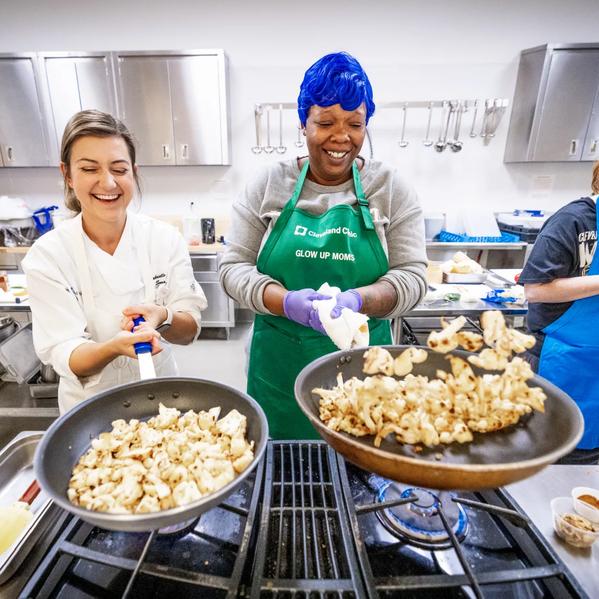
Cleveland Clinic Sous Chef Gabrielle Shipta teaches patients how to cook inside the test kitchen at Cleveland Clinic Stephanie Tubbs Jones Health Center.
Women who experience hypertension, or high blood pressure, before or during pregnancy don’t just face a temporary complication. They face a significantly higher risk of developing chronic hypertension later in life, a serious condition that can lead to stroke, heart attack or kidney disease.
Determined to change this reality, Oluwatosin Goje, MD, Medical Director of the Cleveland Clinic Center for Infant and Maternal Health, launched a healthy cooking class for postpartum at-risk patients in the community. Together with Shannon Walker, PhD, MEd, and supported by a Catalyst Grant, they created a family‑centered, group‑based Food Is Medicine program designed to give women the skills, knowledge and support they need to take control of their long‑term health.
“We integrated a lot of nutrition education, health education and culinary medicine,” says Dr. Walker, Assistant Professor in Family and Community Medicine at The Ohio State University. “They learned how to eat properly, how to read nutrition labels, how to manage stress and how to check their own blood pressure to self-monitor at home."
Dr. Goje and Dr. Walker met with participants every other week for four months in the teaching kitchen at the Cleveland Clinic Stephanie Tubbs Jones Health Center. There, patients cooked alongside Cleveland Clinic chefs as well as chefs from around Northeast Ohio, gaining hands-on experience preparing healthy meals. Community Health Workers guided group conversations where the women shared experiences and built connections with one another.
“Evidence shows that 60% - 80% of a patient’s health outcome is based on where they live, their level of education, how much they earn and risk factors such as smoking or drinking alcohol,” says Dr. Goje. “All of these things play a role. Food justice and food insecurity especially have an impact on health, and our project set out to understand how those issues shape overall health outcomes.”
Twenty patients were screened and selected for the first cohort, which ran from fall 2025 through winter 2026. The program was intentionally designed to be culturally tailored and responsive to participants’ social needs. It reshaped how they think about food, helping them develop new tastes and healthier eating habits. For Dr. Goje, the experience was deeply humbling.
“There’s a lot I take for granted,” says Dr. Goje. “I get into my car, and I go wherever I want to go. Seeing some of these women who don’t have a car still showing up — it was humbling. And seeing the joy on their faces. We couldn’t have done this without the Catalyst Grant. It was highly needed and highly appreciated.”
Catalyst Grants are funded annually by thousands of gifts of all sizes from donors. The competitive grants are awarded to caregivers with ideas to improve the lives of Cleveland Clinic patients, the organization and communities around the world. Dr. Goje and Dr. Walker were awarded about $82,000.
 Search