Locations:




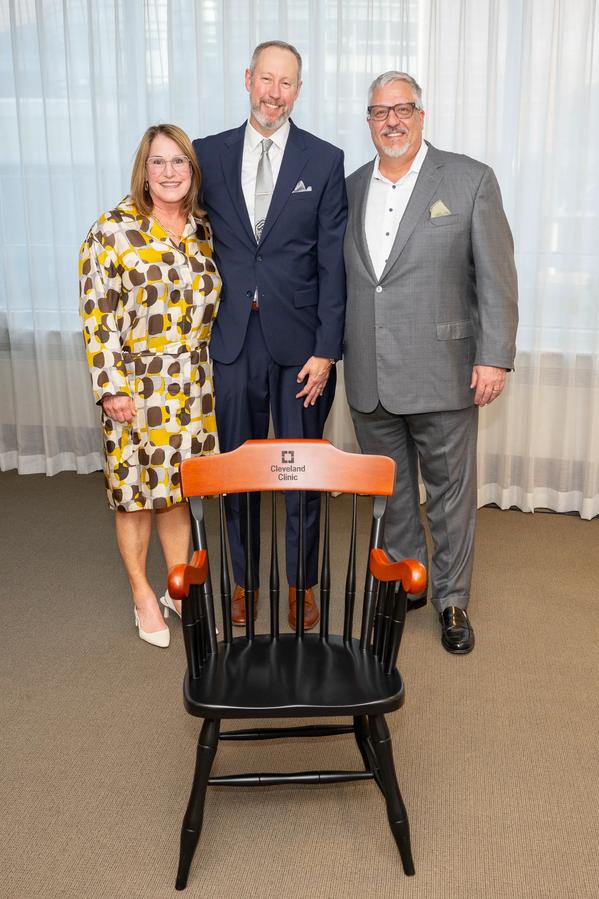
When Kevin Stein and his family moved to Cleveland more than a decade ago, he had no idea a career move would turn into a lasting philanthropic relationship that would impact many lives.
Stein came to Northeast Ohio to work at the headquarters for TransDigm Group, where he eventually became the company’s CEO. During his time with the company, he supported a broad range of causes, including providing transportation for homeless individuals to receive medical care.
“I didn't come from a lot of money or anything, so I feel fortunate to have been successful,” says Kevin. “But with that success, I feel a responsibility to help others, and it has enabled me to help my community and make an impact.”
After retiring from TransDigm a few years ago, Kevin and his family saw a need to expand their giving to focus on the areas where they saw the most need: education and mental health. Their desire to give was, in part, motivated by Kevin’s wife, Kristen, who as a former teacher and principal encountered many children who needed mental health support.
The Steins recognized that mental health is personal. Kevin acknowledges that nearly every family has encountered mental health concerns in some form and that his own family has experienced them as well.
“The need is exploding, it seems like exponentially, but there's a stigma associated with it,” he says. “We all suffer from something, and you just have to figure out how to overcome it, but you need help to do that.”
When the Steins learned there was a way that they could match their passion for supporting mental health access for children with a way that could bring forth change both now and, in the future, they didn’t hesitate to act.
The Steins were presented with the opportunity to create an endowed chair for pediatric mental health to support the research, care and education efforts of Joseph Austerman, DO, at Cleveland Clinic Children’s.
"Mental health struggles are not a local problem. They are a national and worldwide problem,” says Dr. Austerman, who is now the holder of The Stein Family Endowed Chair in Pediatric Behavioral Health.
Dr. Austerman has seen the need firsthand in his decades of work at Cleveland Clinic Children’s. What he’s most excited about with the funding provided from the Stein family’s gift is that it can support training programs that prepare future psychiatrists, psychologists, therapists and developmental pediatric specialists who will ultimately serve patients far beyond Northeast Ohio.
Dr. Austerman is quick to point out that philanthropy is used not simply to fund existing work but to create opportunities for new ideas to emerge. He says the endowment provides flexibility to invest in emerging needs while helping programs become stable enough to attract additional support in the future.
Some of these programs at Cleveland Clinic Children’s include an acute crisis evaluation clinic within the emergency department, where children can be assessed right away to determine if they need mental health care.
“Another key program that we are looking at developing is our psychological trauma line,” says Dr. Austerman. “After a local community mental health agency that was providing substance abuse treatment closed this year, it created a gap where there were almost no services available for kids who require substance abuse treatment locally. We really shifted our focus to filling that gap to help these kids.”
Dr. Austerman is also excited about growing school-based mental health programming. The program puts Cleveland Clinic Children’s staff into local schools to train teachers how to recognize mental illness and get kids the help they need faster. He says Cleveland Clinic is one of the largest academic centers that brings services right to the kids in their schools.
Both the Steins and Dr. Austerman believe that moving children from crisis to stability can change the trajectory of their lives. Sometimes all it takes is a timely connection between a donor who sees a need and the researcher physician who can make it happen.
“We can’t always rely on the government to provide as much as individuals who are inspired to give — and we can’t leave money sitting on the sidelines that can really help people,” says Kevin. “This is something we can do to provide the resources to the right professionals and get them in a place where they can do the research and help people.”
Dr. Austerman says that when it comes to an endowment, his team isn’t focused on one-time initiatives — they want to plant the seed for bigger things to grow.
"There is a ripple effect of this gift,” he says. “And that ripple effect will be felt by all the kids and their families and the lives they touch, even those who have not even been born yet. It's a beautiful thing."


 Search