Locations:


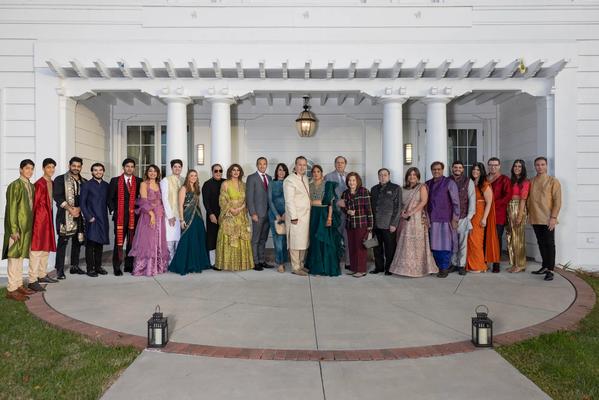
Anupama "Anu" (Chadha) Malhotra immigrated to the United States from India in 1981 at age 9. Her close-knit family settled on Long Island, remaining deeply supportive of one another.
During her decades-long marketing career in New York, Anu counseled leaders at fast-growing startups and global corporations like PepsiCo and Danone. Alongside her professional commitments, she raised twin sons, Aaron and Alex, 15, as a single mother, building a life for her family in Rye Brook, New York.
Anu’s momentum stalled when her mother, Kanta Chadha, experienced heart failure. Grateful for a referral from a New York cardiologist, the family turned to Cleveland Clinic.
“They extended her life, and she enjoyed a much better quality of life,” Anu says. “We have great hospitals in New York, but Cleveland Clinic is just on a different level.”
Anu and her two older brothers lived intermittently in Cleveland with their parents to care for Kanta, who passed away in 2006 at age 64. “Mom was sick for so long, and nobody really knew what was wrong," Anu says.
At age 36, Anu discovered during routine IVF testing that she was in atrial fibrillation (AFib). Because she felt completely healthy, the diagnosis came as a shock. Post-delivery, doctors tried unsuccessfully to shock her heart back into rhythm. They ruled out an ablation because her AFib was too widespread to pinpoint, which would require up to nine risky procedures with no guarantees. Instead, she was prescribed a blood thinner and monitored.
A decade later, during a business trip to Denver, Anu became profoundly ill. She initially blamed her extreme exhaustion on altitude sickness or travel fatigue, but back home her symptoms worsened, causing rapid weight loss. Two years later, while walking with her future husband, Frank Raccuglia, Anu turned pale and nearly collapsed. A medical evaluation revealed severe bradycardia; her heart rate had plummeted to 27 beats per minute. She received a pacemaker, which temporarily restored her energy, though exhaustion, muscle weakness and brain fog returned.
The cause of her illness remained baffling. Like her mother, Anu was a physically fit nonsmoker with no history of diabetes. Frank was determined to find answers, and his research quickly led them back to Cleveland Clinic, to W. H. Wilson Tang, MD, a heart failure and cardiac transplantation specialist.
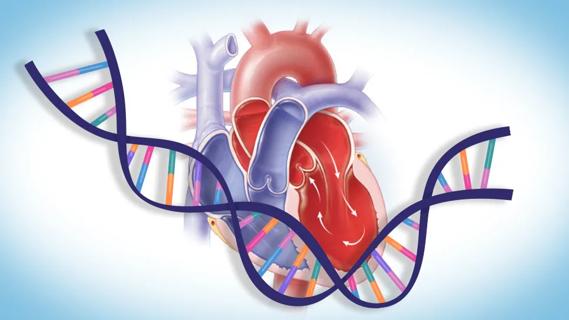
A genetic test confirmed that Anu’s heart failure and dilated cardiomyopathy were caused by a specific LMNA gene variant. Dr. Tang explained that specific changes in this gene damage the heart muscle cell's control center, causing problems with the heart's electrical system before the pumping function weakens, eventually leading to scarring and heart failure.
Proactive care and research
While her condition is rare and there is currently no cure, Anu remains deeply grateful for her care. Her clinical team’s knowledge and proactive, multidisciplinary approach have led to targeted medication to slow her disease progression and an upgraded three-lead cardiac resynchronization therapy defibrillator (CRT-D) to reduce her symptoms. She continues to be monitored and evaluated for other treatment.
“Anu took incredible ownership of her health by stepping away from work and dedicating herself to a structured exercise routine,” Dr. Tang notes.
"Dr. Tang spends so much time with me," Anu says. "He helps me mentally and physically, explains the drugs, and tries to keep me positive. He tells me, 'Listen, I get it, but you are doing good.'”
Because the condition initially mimics standard arrhythmias, Anu and Frank now advocate for early genetic testing and physician education. To support Dr. Tang’s research, the couple forewent a traditional bridal registry when they married on Nov. 24, 2023, asking loved ones to instead donate to his lab through their personal fundraising page.
“There’s a lot of excitement around the research being done,” says Dr. Tang. “Our lab’s primary goal is to map the biological pathways driving disease progression to develop new therapies to slow the condition down. The secondary goal is to identify existing medicines that can be repurposed to target and block these pathways.”
"I am hopeful a cure will be found,” Anu says. “But I’ve also learned you have to enjoy what you have. We have a lot of blessings."
 Search