Locations:




The Cleveland Clinic Lerner of College of Medicine of Case Western Reserve University (CCLCM) is a five-year program dedicated to developing the next generation of physician investigators. Students are assigned dedicated physician and research advisors to help ensure they reach their goals. In their fourth year, students work with a mentor to develop a master’s-level thesis in basic science, translational medicine, clinical medicine or health systems. When the students graduate, they each receive an MD with Special Qualification in Biomedical Research from Case Western Reserve University.
The research in which students are involved is critical, timely and often results in presentations at national conferences and publication in scholarly journals. The examples below briefly describe two students’ research projects involving cancer:
“My research focused on developing cancer vaccines that can specifically target HPV-related cancers without requiring customized engineering for each specific patient. Cancer vaccines can be a great alternative to more traditional treatments, as they target specific tumors without some of the side effects that plague chemotherapy and radiation recipients. To create these vaccines, doctors take a sample of a patient’s tumor to utilize as a target in activating the host immune system against the cancer. Unfortunately, the highly specific nature of these treatments means that they are costly and time-consuming to produce. My team, led by Natalie Silver, MD, looked at a shared protein expressed by HPV-related cancer cells to develop an off-the-shelf cancer vaccine that can specifically target HPV-related cancer without requiring personalized engineering. Our hope is that off-the-shelf vaccines will eventually be widely available as an alternative treatment for those who have an aggressive form of cancer or are resistant to current therapies.”
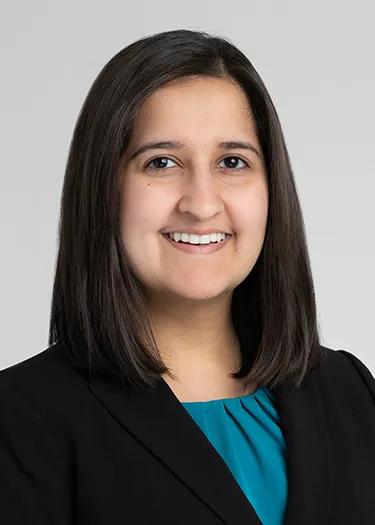
Image content: This image is available to view online.
View image online (https://assets.clevelandclinic.org/transform/e0a9b962-e66c-4428-acd2-9160e3945923/Duggal_Radhika_K24800-ERAS)
-Radhika Duggal (’25)
“My research focuses on growing organoids, which are lab-grown miniature organ models, to model bile duct cancers. When a tumor is surgically removed by Federico Aucejo, MD, Director of the Liver Cancer Program and Surgical Director of the Liver Tumor Clinic at Main Campus, part of it goes to pathology for diagnostic purposes, but part of it can be used for research with patient consent. In the lab of Jan Joseph Melenhorst, PhD, we can process the tumor into single cells and grow three-dimensional tumor models. Having these three-dimensional patient-derived models available gives us much more accurate insight into what’s going on inside a patient than traditional two-dimensional cell lines. Our goal is to perfect this type of modelling and then expose these organoids to different treatments, including CAR-T cell therapy our lab is developing, to see which are most effective for each individual patient.”
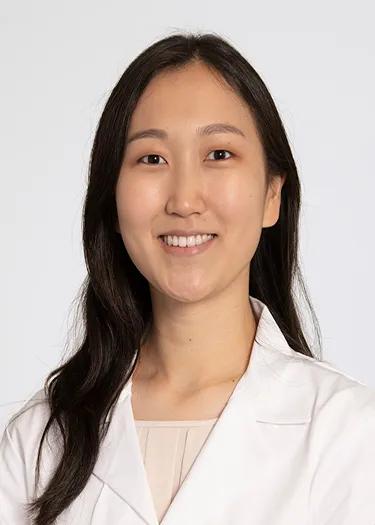
Image content: This image is available to view online.
View image online (https://assets.clevelandclinic.org/transform/2eba4c03-dd55-4073-967e-e932a2d5c804/Hong_Hanna_K38508_L-375-525)
-Hanna Hong (’26)
Learn more about the research component of the CCLCM curriculum.


 Search