Locations:




The technology behind MediView XR, Inc., a Cleveland Clinic portfolio company, allows proceduralists to see 3D imaging of a patient’s anatomy during minimally invasive procedures. Philanthropic efforts are helping to bring the technology to more Cleveland Clinic patients.
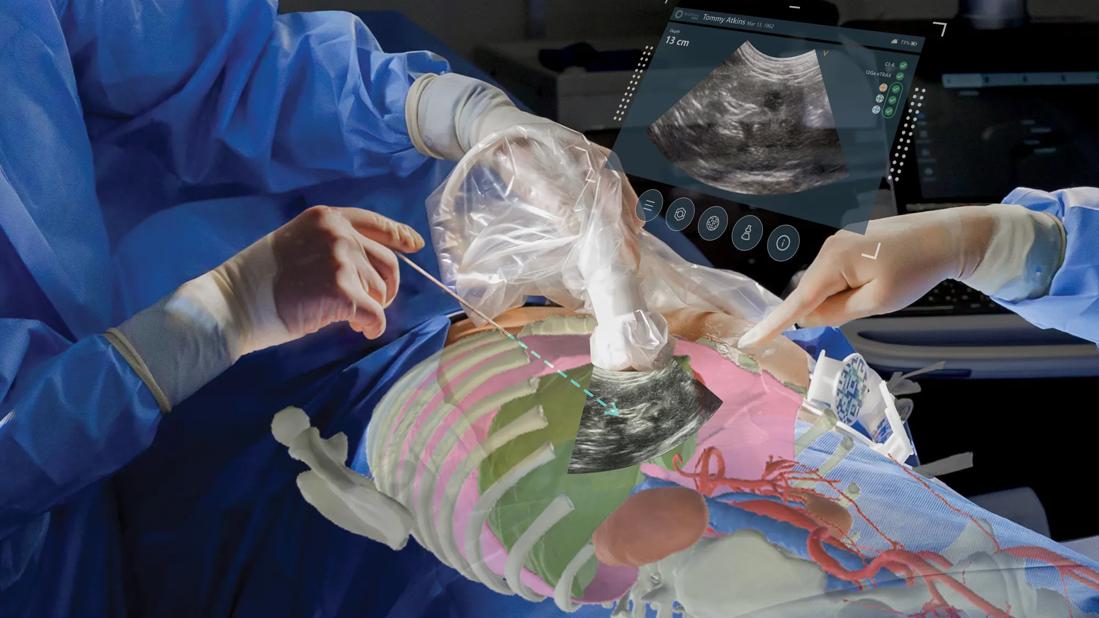
Image content: This image is available to view online.
View image online (https://assets.clevelandclinic.org/transform/f2c1d461-a9e1-4958-9f2f-3030a113ebdc/Generated-Image)
Surgical procedure using innovative technology such as 3D imaging.
As an interventional radiologist, Chuck Martin, MD, relies on 2D imaging to navigate the 3D complexity of the human body.
“It’s not part of my training and expertise to open the body and move organs around to get to the liver or a lymph node,” he said. “So as an IR doc, we use CT scan, ultrasound or other image-guided processes to navigate through the skin to whatever structure we're targeting.”
Looking at imaging that may be to the left, right, or above the patient—all while performing the work—creates significant cognitive load. It takes practice and precision to avoid hitting critical structures.
About a decade ago, colleagues in Cleveland Clinic’s Department of Biomedical Engineering, Karl West, MS, Project Scientist, and Jeff Yanof, PhD, former Senior Principal Research Engineer, became curious about how augmented reality might be better used in clinic settings like those described by Dr. Martin.
West and Dr. Yanof disclosed their early concepts to Cleveland Clinic Innovations to protect their intellectual property and explore commercialization opportunities. During this process, they connected with Dr. Martin and began to explore clinical applications of augmented reality—specifically in needle guided ablation procedures in the interventional radiology suite.
The inventions were licensed to MediView XR, Inc., a Cleveland Clinic portfolio company.
MediView’s XR90 system, lets proceduralists like Dr. Martin see a patient's anatomy in 3D augmented reality superimposed directly over their body during minimally invasive procedures. Pre-procedural CT scans help generate the 3D image.
“Seeing the anatomy in three dimensions significantly reduces the cognitive load,” said Dr. Martin, also noting improved precision in targeting tumors and confidence in navigating the body without hitting critical structures.
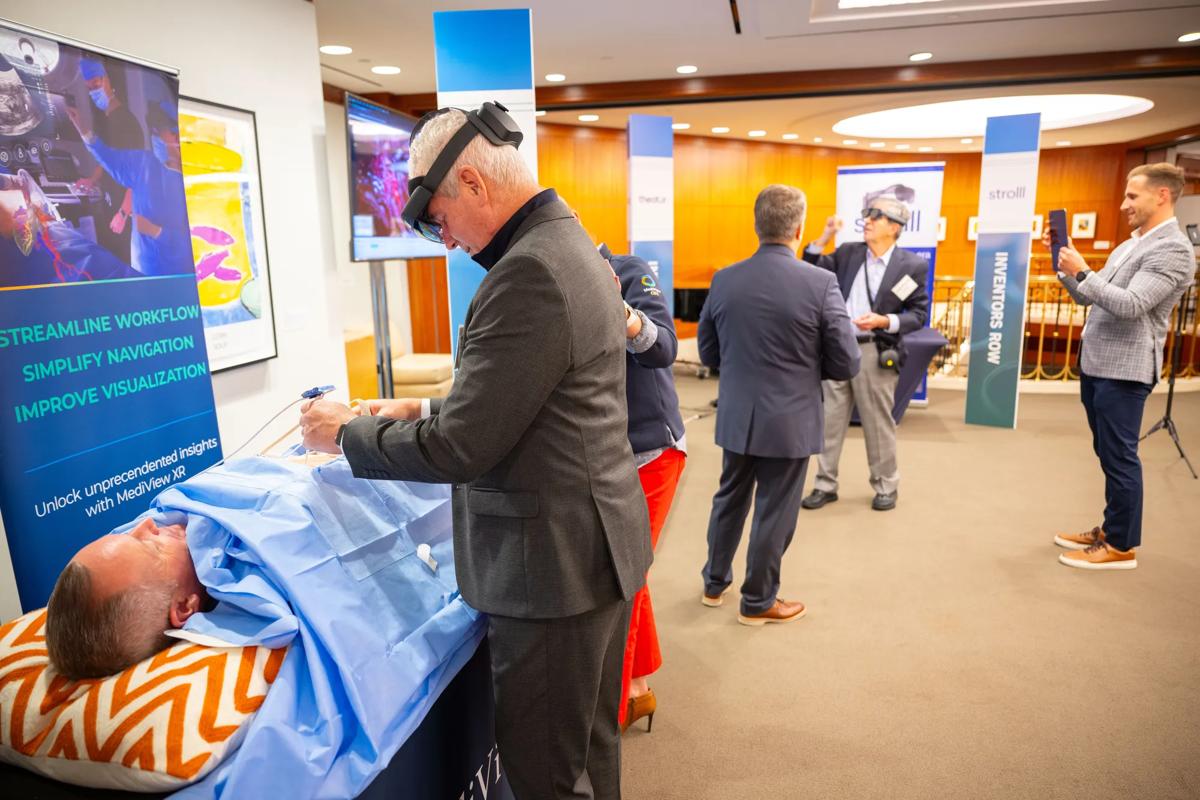
Image content: This image is available to view online.
View image online (https://assets.clevelandclinic.org/transform/5816eec0-a5bb-4c94-aa17-4534c119f523/04-13-26-MediView-3)
An Inside Innovations attendee interacts with a MediView demonstration.
Philanthropic efforts are helping bring the technology to more Cleveland Clinic patients.
In 2024 and 2025, donors and inventors gathered for Inside Innovations, a Shark Tank-style idea pitch competition and technology showcase.
For many, a MediView demonstration stopped them in their tracks; they could interact with a patient’s anatomy, superimposed over a mannequin, as if they were standing in the operating room.
“We’re literally turning walls into windows, turning the invisible visible,” said Darcy Bajko, MediView’s Vice President of Commercialization and Customer Success. “When people see it, they understand how this can advance the way physicians perform procedures.”
Several attendees invested in the company as part of its Series A financing.
“Donors want to see cutting edge technology that started at Cleveland Clinic succeed,” said Mina Fahim, MediView’s CEO and President.
One donor who received cancer care at Cleveland Clinic Florida funded the location’s first XR90, telling Fahim: “I wish this would have been around during my care, and I want to make it available to the next person.”
Philanthropy helps to bring promising medical innovations to patients. Cleveland Clinic recently launched the Global Venture Philanthropy Fund for donors who want to make a difference.
“We have projects moving through our office that show promise, but it’s too early to support immediate commercialization,” said JD Friedland, Executive Director, Innovations Investments and Ventures at Cleveland Clinic and member of MediView’s Board of Directors. “In these cases, donor philanthropic funding can bridge the gap to advance those technologies when few other sources of funding might be available.”
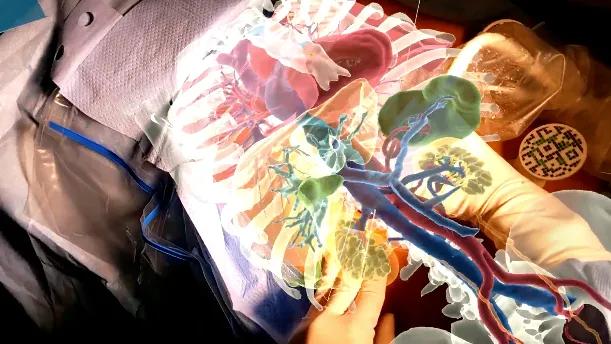
Image content: This image is available to view online.
View image online (https://assets.clevelandclinic.org/transform/7b7bf94f-1952-4d7b-a3d2-e8e1b5799342/04-13-26-MediView-2)
3D imaging scan of a patients' anatomy. Photo courtesy of MediView.
Currently, five XR90 systems are deployed in hospitals across the United States. As MediView grows, Friedland said it will become important to show potential customers the technology’s financial and clinical benefits, such as reductions in complications, procedure time, or readmissions.
At Cleveland Clinic, the technology is connecting providers across our global enterprise. Last year, Dr. Martin streamed a procedure to colleagues at Cleveland Clinic Florida; they were able to see his view of the patient and 3D anatomy in real time. He hopes to connect with colleagues in London and Abu Dhabi a similar way.
The potential impact of MediView for patients and physicians gives Dr. Martin purpose.
“Something that I worked on will help more people than I could ever reach with my own hands,” he said. “That realization is powerful—and it changed my why and my reason for getting up in the morning.”
Disclosure: In addition to the collaborations mentioned in this article, Cleveland Clinic is an investor in MediView and may benefit financially from the sale of this technology. Dr. Martin owns stock or stock options in MediView and may receive royalty payments from Cleveland Clinic for inventions or discoveries commercialized through the company.





 Search