Locations:




Barriers related to cost, access and durability prevent many patients from benefiting from CAR T-cell therapy, which is changing cancer care. Cleveland Clinic researchers are addressing these pain points and discovering ways to make therapy more accessible.
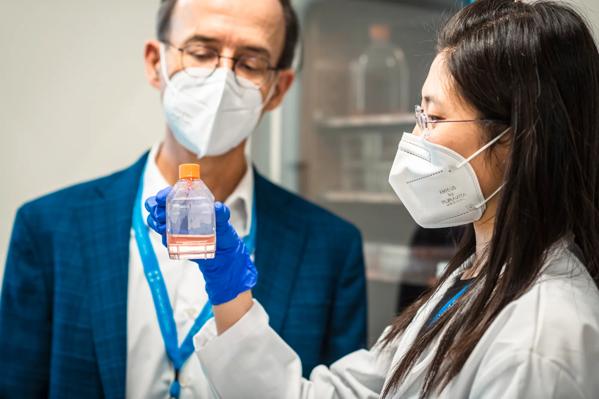
Chimeric antigen receptor (CAR) T-cell therapy is changing cancer care, but barriers related to cost, access and durability of the manufactured cells prevent many patients from benefiting. Cleveland Clinic researchers are working to change that.
CAR T-cell therapy involves genetically modifying a patient’s own T cells, specialized white blood cells that play a crucial role in our immune system, to become stronger cancer fighters and then infusing them back into the bloodstream.
“The first generation of CAR T therapies were based on a manufacturing process that was quite involved, time consuming and costly,” says Dr. Jos Melenhorst, PhD, Staff, Cancer Sciences.
Manufacturing complexities drive costs toward $400,000-500,000 per patient. Dr. Melenhorst’s research focuses on addressing pain points and making therapy more accessible.
As new advances move beyond pre-clinical studies, Cleveland Clinic Innovations is seeking co-development, research and licensing partners to bring them closer to patients.
Explore the entire portfolio or contact us.
Not everyone responds to CAR T-cell therapy, and current clinical predictors offer limited prognostic value. Early guidance in patient identification can prevent failed treatments, high costs, and extended hospitalizations.
Dr. Melenhorst’s team developed two biomarkers assays that can identify patients who are most likely to respond and help match them to the most appropriate CAR T product. In pre-clinical validation, the assay achieved 100 percent sensitivity and 84 percent specificity in identifying which CAR construct would produce a durable response in a given patient—a level of predictive performance not previously demonstrated in CAR T product selection.
“There are different designs of the CAR, and they don’t all function the same way,” Dr. Melenhorst says. “It’s a very exciting finding that helps with patient selection, and also down the line in making better CAR T cells.”
But even the most optimized therapy can fail in a weakened immune system. When a patient with blood cancer begins CAR T therapy, most cells in their blood are tumor cells, not the T cells needed to modify into cancer-fighting therapies.
“These therapies are expensive, and you usually only get one shot with this to treat patients,” says Saqib Sachani, PhD, MBA, Director, Innovations Business Development and Licensing. “Getting the patient in the best immunological state possible, meaningfully improves the odds.”
Dr. Melenhorst’s “immune reset” innovation uses existing drugs to reduce the tumor burden and prepare the immune system before CAR-T therapy begins.
Across Cleveland Clinic, Dr. Melenhorst and other researchers are finding ways to make the CAR T products more durable.
Dr. Melenhorst’s research uses genetic tools to modify specific genes inside CAR T cells, helping them persist and fight cancer long after infusion. Though developed for leukemia treatments, Dr. Melenhorst is now exploring whether these methods can help treat solid tumors, an area where CAR T has historically underperformed.
Elsewhere, Dr. Jae Jung, PhD, Associate Chief of Emerging Science & Technology; Director, Global Center for Pathogen & Human Health Research; Chair, Department of Microbial Sciences in Health and Betsy B. deWindt Endowed Chair in Cancer Biology, drew on a foundational principle of viral immunology—that herpesviruses modulate the immune system to survive—to reimagine CAR T therapy. Herpesviruses have evolved ways to control immune signaling without overworking immune cells. Dr. Jung saw an opportunity to apply that same logic to engineer CAR T cells that fight cancer more effectively and are less likely to burn out.
Dr. Jung and Dr. Melenhorst collaboratively developed two new types of CAR T cells, attaching short peptides derived from herpesvirus. In standard CAR T manufacturing, only a fraction of T cells become highly effective cancer-killing cells, a biological limitation that can contribute to failure and added healthcare costs.
Dr. Jung’s design flips the balance. In preclinical models, both designs produced a higher fraction of cytotoxic “killer” T cells, greater persistence and stronger antitumor activity than conventional CD28- or 4-1BB-based CARs. Importantly, these herpesvirus-derived peptides are designed to fit into existing CAR T platforms.
“If our CAR T cell is persistent in patients and can ultimately prevent relapse in a highly efficient manner, that would be quite important in a clinical setting,” Dr. Jung says.
When it opens in 2027, Cleveland Clinic's Good Manufacturing Practice (GMP) Facility will provide the controlled, quality-assured manufacturing infrastructure required to produce investigational cell therapy products under FDA-compliant standards. This will give the enterprise end-to-end capability to advance internally developed CAR T-cell candidates and other cellular therapies into Phase I clinical trials.
Manufacturing CAR T-cell products in-house will also eliminate the costly and time-intensive process of working with outside vendors. An added benefit, Dr. Melenhorst has discovered, is that shortening the CAR-T process also improves potency and efficacy.
Importantly, the GMP facility will also serve as a partnership platform: industry collaborators will be able to manufacture clinical-grade products alongside Cleveland Clinic clinicians and investigators.
“Cleveland Clinic offers something few institutions can: cutting-edge science, deep clinical expertise and the GMP capacity to advance therapies from bench to bedside under one roof,” says Sachani. “We're looking for industry partners who want to collaborate with our investigators and clinical teams to bring innovations to patients faster.”





 Search