Locations:





Cleveland Clinic News Service | 216.444.0141
We’re available to shoot custom interviews & b-roll for media outlets upon request.
CCNS health and medical content is consumer-friendly, professional broadcast quality (available in HD), and available to media outlets each day.
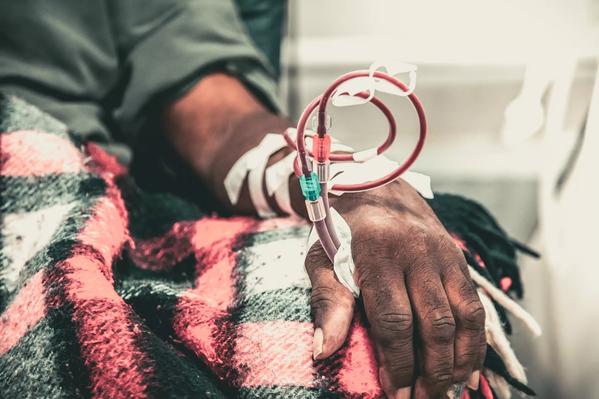

Image content: This image is available to view online.
View image online (https://assets.clevelandclinic.org/transform/50cc0d41-da9d-434f-a291-592dcb8bab11/URL_2080389_04-09-21_061_MLC-scaled_jpg)
Crystal Gadegbeku, M.D.
In a cleveland.com op-ed, Crystal Gadegbeku, M.D. — chair of the Department of Kidney Medicine in the Glickman Urological and Kidney Institute at Cleveland Clinic — explains the importance of not using race as a biomarker in determining a person’s kidney function.
“Because of the inherent bias in using race as a factor,” she writes, “the National Kidney Foundation and the American Society of Nephrology led a task force to find a better equation that estimates kidney function without a race variable.”
To read the complete op-ed, visit cleveland.com.






 Search